Southwestern Utah
Zion National Park: the canyon that defines the state
Two thousand feet of sandstone, one river, and a shuttle system that decides your whole day. Here is how to plan around the permit lotteries and the heat.
The overview
What Zion actually is
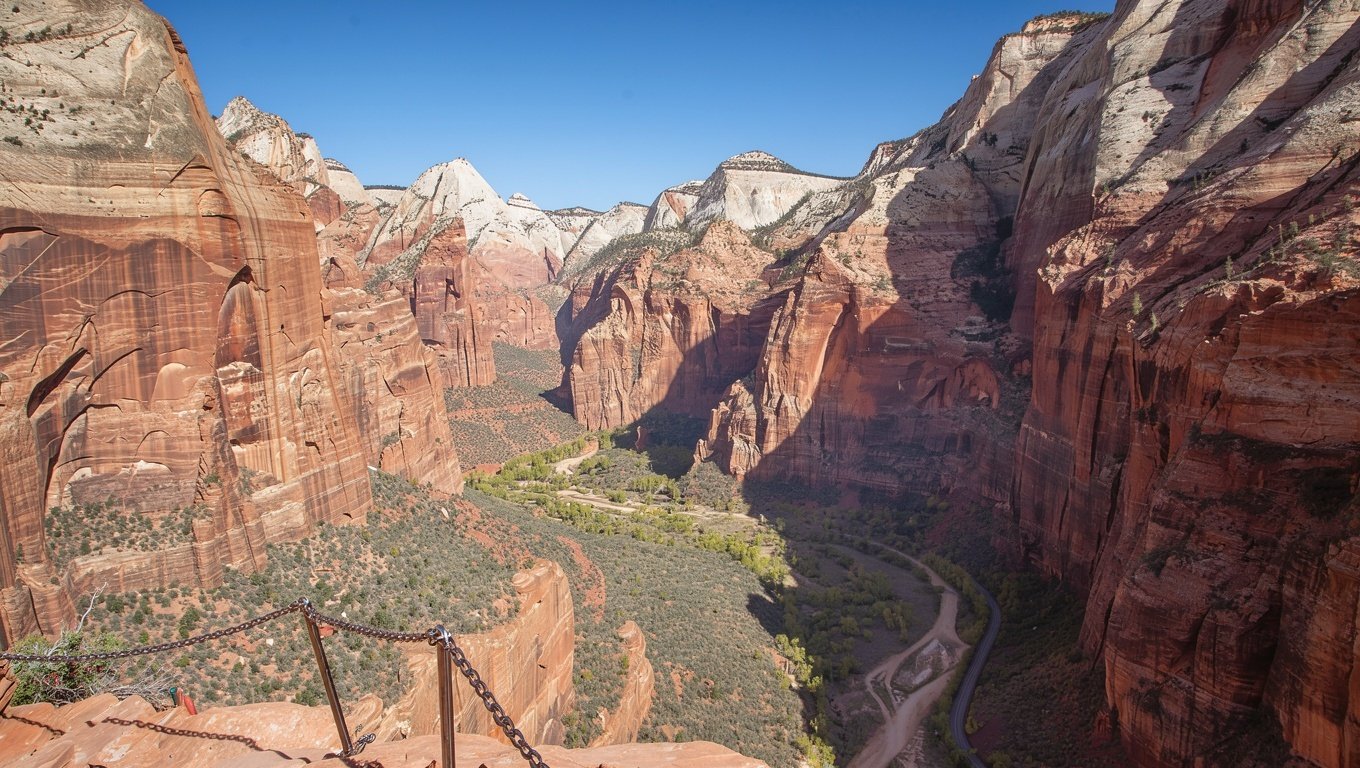
Zion is a canyon, not a plateau. The Virgin River has been cutting down through Navajo sandstone for millions of years, and the result is a 2,000-foot-deep trench with walls that change colour from cream to rust as the sun moves.
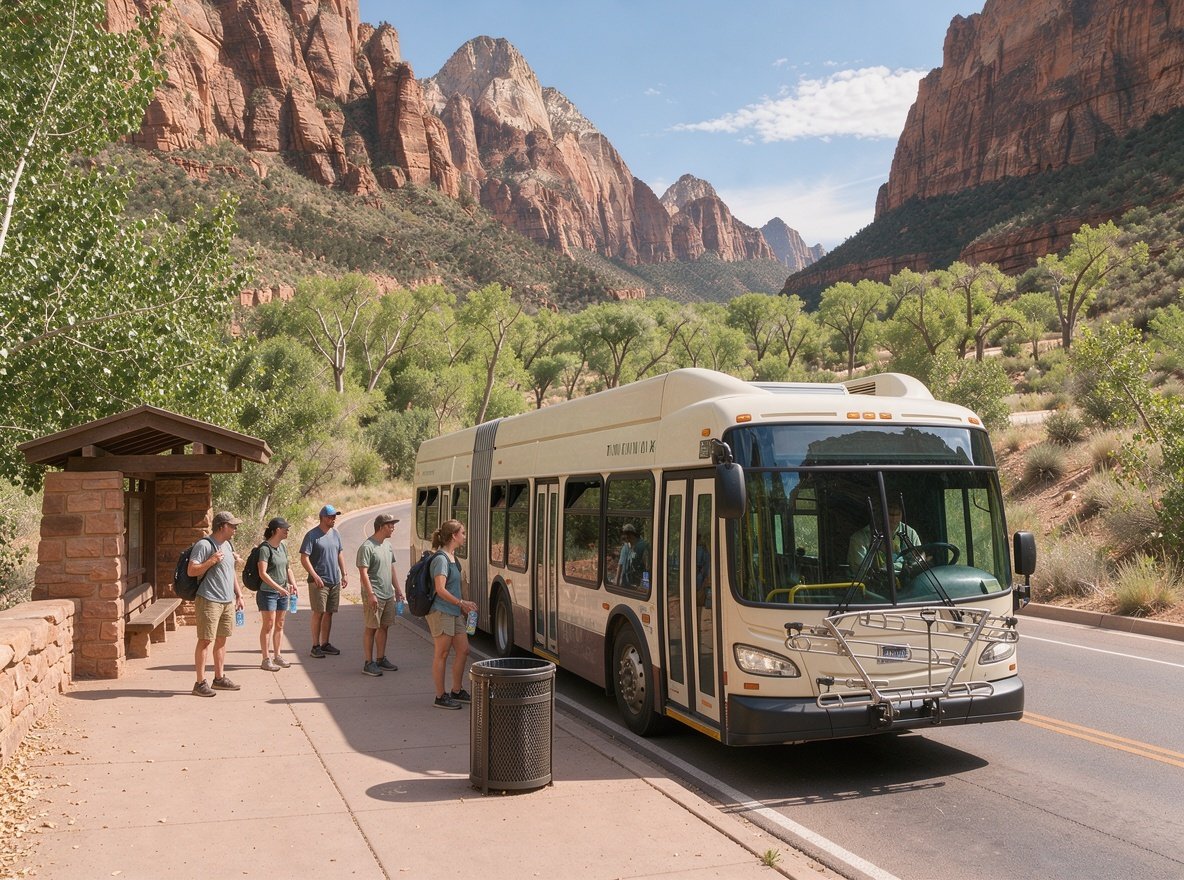
Almost everything visitors come for sits along a single six-mile road: the Zion Canyon Scenic Drive. From March through November that road is closed to private vehicles, and a free shuttle does the work. This is the single most important logistical fact about the park, and the reason people who arrive at 10am in July have a bad day.
The park has two main areas. Zion Canyon is the famous one — Angels Landing, the Narrows, Emerald Pools. Kolob Canyons, off Interstate 15 to the northwest, is a separate finger-canyon section that most visitors skip entirely and that offers genuinely empty trails.
Two days, planned properly
Day one: First shuttle into the canyon. Angels Landing if you have a permit; otherwise the West Rim Trail to Scout Lookout. Afternoon at Emerald Pools. Day two: the Narrows from the Temple of Sinawava, starting as early as possible, then the Canyon Overlook Trail at sunset.
The part people get wrong
Angels Landing permits and the shuttle
Both of these catch out first-time visitors, and neither is optional once the season starts.
Angels Landing: a lottery, not a queue
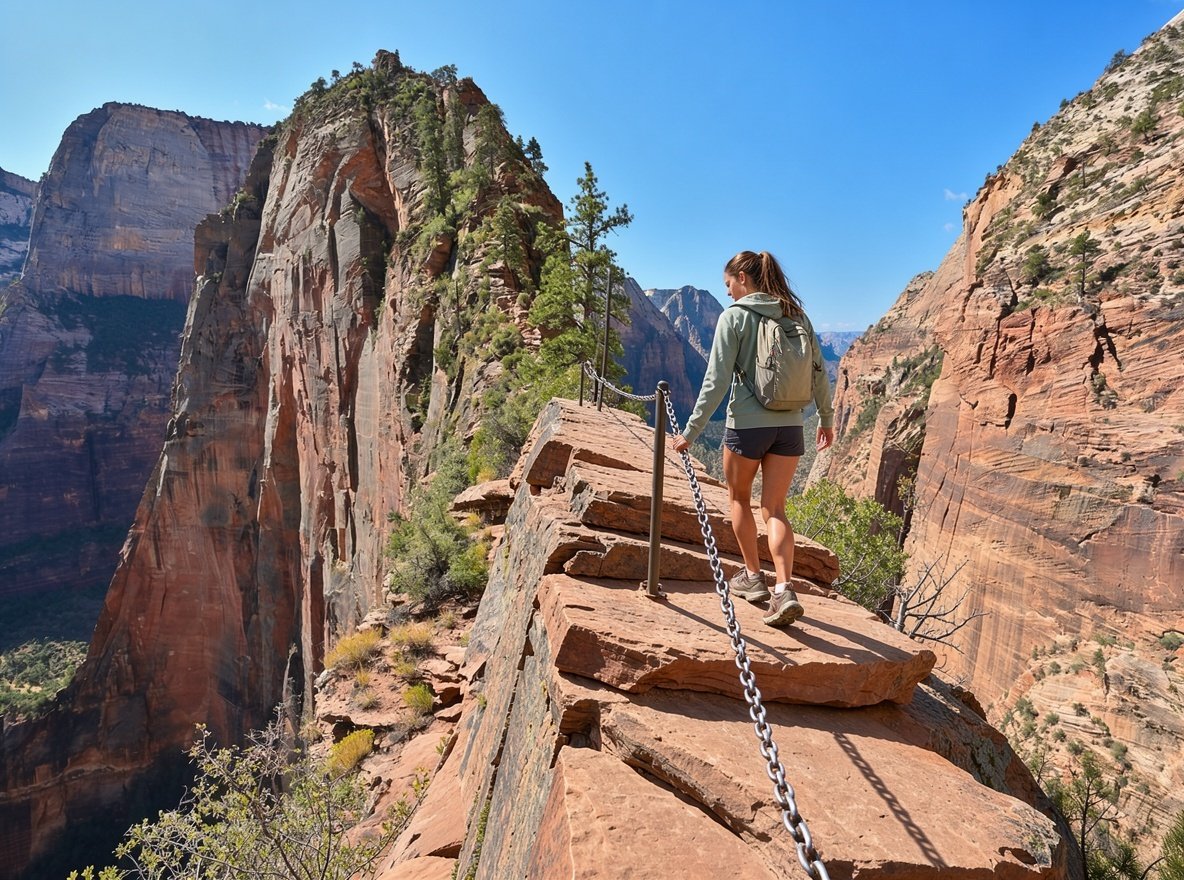
The final half-mile of Angels Landing runs along a knife-edge ridge with chains bolted into the rock and a drop of roughly 1,000 feet on both sides. Since 2022 the park has capped the number of people on that section, and the only way up is a permit.
There are two chances. A seasonal lottery opens months ahead for the main season, and a day-before lottery opens the afternoon before your intended hike. The day-before route is the one to use if your dates are flexible — it also means you find out quickly.
Have a backup
Scout Lookout sits at the base of the permit section and needs no permit. It is a genuinely spectacular viewpoint, and if you do not win the lottery it is a fine consolation. Observation Point and the Canyon Overlook Trail are the other two big-view alternatives.
The shuttle: plan your day around it
The Zion Canyon shuttle runs from the visitor centre to the Temple of Sinawava, with nine stops. It is free and frequent, but in summer the queue at the visitor centre can run to 45 minutes by mid-morning.
A second shuttle connects Springdale to the park entrance, so you can leave the car at your hotel. Both run from early morning to late evening, with seasonal variations.
- Be on the first or second shuttle — the canyon is transformed before 9am
- The last shuttle back leaves earlier than you expect; check the board at the visitor centre
- Bicycles are allowed on the scenic drive and change the whole experience
- In winter the road reopens to cars, and you drive yourself
Trails
The hikes worth your day
Distances are round trip. Zion's trails are short in miles and large in vertical gain, so treat the elevation column as seriously as the distance.
| Trail | Distance | Gain | Difficulty | Permit |
|---|---|---|---|---|
| Riverside Walk | 3.5 km | 35 m | Easy, paved | None |
| Emerald Pools | 4.8 km | 210 m | Moderate | None |
| Canyon Overlook | 1.6 km | 50 m | Easy, exposure | None |
| Scout Lookout | 6.4 km | 360 m | Moderate, switchbacks | None |
| Angels Landing | 8.7 km | 450 m | Hard, exposure | Lottery required |
| The Narrows (to Orderville) | 6 km | River bed | Moderate, wet | None for day hike |
| Observation Point | 16 km | 650 m | Hard | None |
Observation Point is reached from the East Mesa trailhead outside the park when the Weeping Rock route is closed — check current access before setting out.
Risk, honestly
Two hazards that are not theoretical
Flash floods
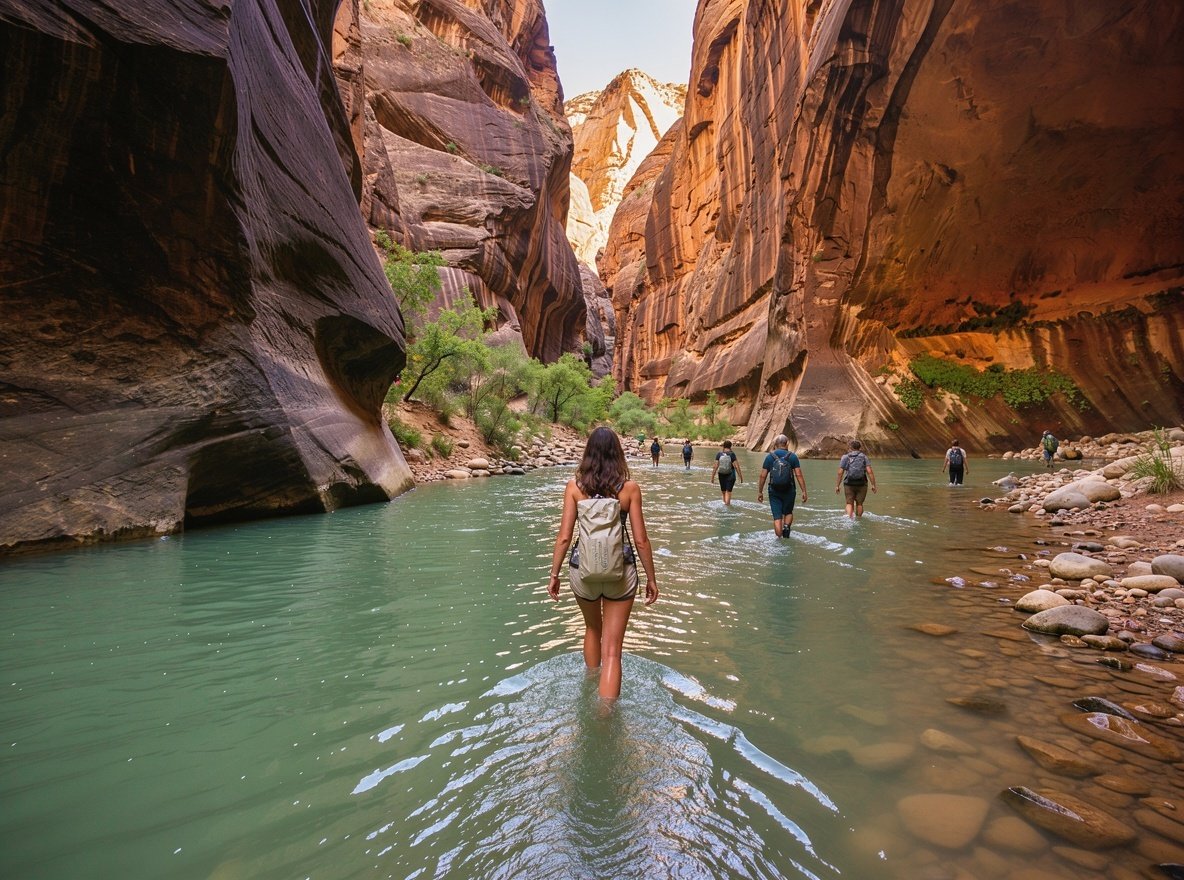
The Narrows and any slot canyon can flood within minutes of rain falling miles away — in a place you cannot see. A clear sky overhead is not evidence of safety. Check the park's flash flood forecast at the visitor centre or backcountry desk every single morning before entering a narrow canyon.
Heat
July and August regularly push past 38 °C (100 °F) on the canyon floor, and the sandstone radiates the heat back at you. Heat illness on the Angels Landing switchbacks is routine. Start at first light, carry far more water than feels reasonable, and turn around if you are not sweating.
Winter is different
From December to February the canyon is quiet, the road reopens to cars, and the light on the walls is extraordinary. Bring traction devices for the switchbacks — the trail ices over in shade and stays that way all day.
Getting there and where to sleep
Getting there
- From Las Vegas: 2 h 45 m via Interstate 15 and State Route 9. The closest major airport.
- From Salt Lake City: 4 h 30 m. Longer, but useful if you are combining skiing.
- From Bryce Canyon: 1 h 50 m via Highway 89 and Route 9.
- Route 9 through the park passes through the Zion-Mount Carmel Tunnel — oversized vehicles need a tunnel escort permit.
Where to sleep
- Springdale — at the gate, walkable to the shuttle, best range of restaurants.
- Zion Lodge — the only in-park lodging, booked out many months ahead.
- Watchman & South Campgrounds — reserve well ahead; South is seasonal.
- Hurricane or La Verkin — 30 minutes out, noticeably cheaper.
- Kanab — 45 minutes east, a good base for combining with the Wave lottery.
Zion questions
How do you get an Angels Landing permit?
Through a lottery. A seasonal lottery runs in advance for the main season, and a day-before lottery opens the afternoon before your intended hike. The day-before route suits flexible travellers. Either way, plan an alternative for the same day — Scout Lookout, Observation Point and Canyon Overlook all deliver big views without a permit.
Do you need a reservation to enter Zion?
Zion has not required a general entry reservation, but the Zion Canyon Scenic Drive is closed to private vehicles for most of the year and served by a mandatory free shuttle. You pay the entrance fee at the gate, park at the visitor centre, and ride in.
How long does the Narrows take?
The bottom-up day hike from the Temple of Sinawava to Big Spring is about 16 km round trip and takes five to seven hours. Most people turn around at Orderville Canyon — roughly 6 km round trip — and still feel they saw the best of it.
When is the best time to visit Zion?
Late April to mid-May and September to mid-October: warm but not brutal, with manageable crowds. Winter is quiet and beautiful but cold in the shade. July and August combine peak heat, peak crowds and monsoon flash-flood risk.
Can you see Zion in one day?
You can see the canyon, but you will rush it. One day gets you a scenic drive, one hike and the shuttle experience. Two days lets you do both Angels Landing (or Scout Lookout) and the Narrows without sprinting. Three adds Kolob Canyons.