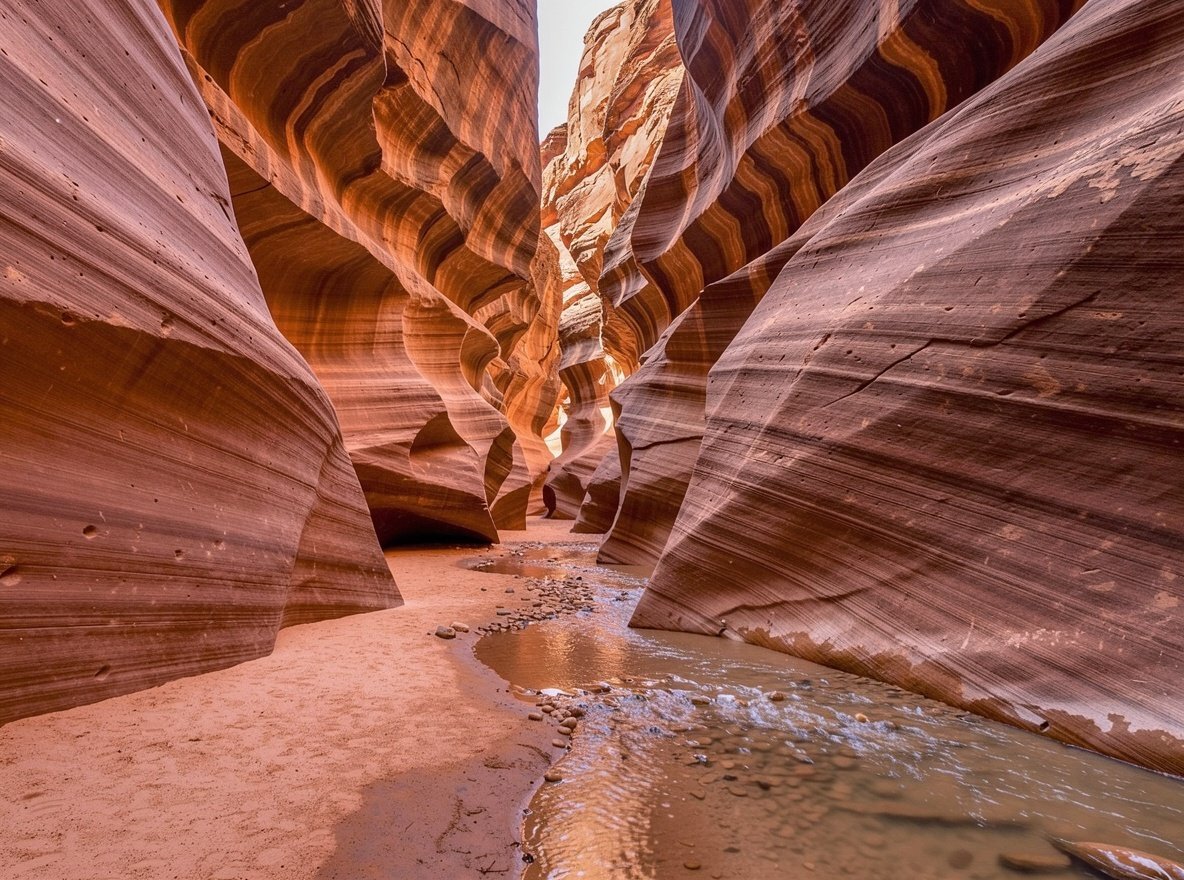
Sculpted cream and rust sandstone walls of a narrow slot canyon in Zion National Park

Utah · National Parks

Utah’s Mighty 5: which parks to visit, and in what order

Zion, Bryce Canyon, Arches, Canyonlands and Capitol Reef sit within a 300-mile arc of southern Utah. They are close enough to combine and different enough that the order matters.

How to think about the five

One state, five completely different landscapes

The Mighty 5 is a marketing name, not a geological category. Zion is a deep canyon cut through the Colorado Plateau's western edge. Bryce is a series of amphitheatres eroded out of soft limestone. Arches is a dense field of sandstone fins. Canyonlands is a 500-square-mile river junction. Capitol Reef is a 100-mile fold in the earth's crust.

That difference is the reason the parks complement each other so well — and the reason a trip built around them works better as a loop than as a checklist. Seeing all five properly takes about nine days. Seeing three of them well takes five.

If you only have a week, most people do Zion, Bryce and either Arches or Canyonlands. If you have ten days or more, add Capitol Reef and the scenic drive between Bryce and Torrey, which is one of the emptiest and most underrated stretches of road in the American West.

Order matters more than you think

Coming from Las Vegas, run Zion → Bryce → Capitol Reef → Moab and fly out of Grand Junction or Salt Lake City. Coming from Salt Lake City, do the reverse: Moab first, Zion last, so the biggest scenery saves itself for the end.

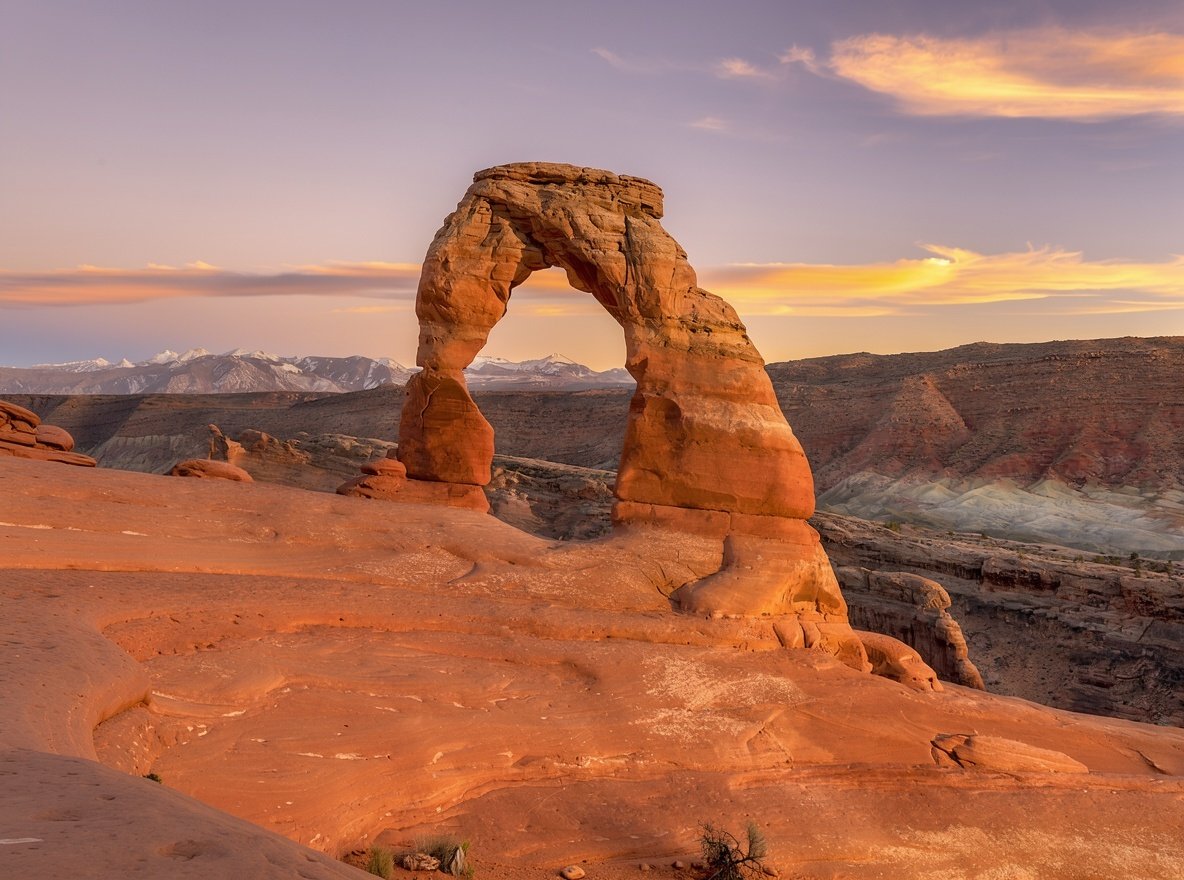
Delicate Arch standing on bare sandstone at sunset in Arches National Park, Utah
Delicate Arch is Utah's state symbol — and Arches' single most crowded trail at sunset. Go at sunrise instead.

Side by side

Compare the five parks

Crowds, hiking character and the amount of time each park actually rewards. Use this to cut rather than to plan — most trips are improved by removing a park.

The Mighty 5 compared — time needed, best season and crowd pressure
Park Days Best months Crowds Best for
Zion 2 Apr–May, Sep–Oct Very high; shuttle mandatory most of the year Canyon hikes, the Narrows, big walls
Bryce Canyon 1 May–Jun, Sep; winter for snow Moderate; concentrated at sunrise viewpoints Hoodoos, sunrises, dark skies
Arches 1–2 Mar–May, Sep–Oct High; timed entry in peak season Short iconic hikes, arches, sunset photography
Canyonlands 1 (3+ for backcountry) Apr–May, Sep–Oct Low; most visitors only see one overlook Solitude, four-wheel drive, river country
Capitol Reef 1 Apr–Jun, Sep–Oct Low — the quietest of the five Geology, orchards, empty trails, scenic driving

Entrance fees: Zion, Bryce and Canyonlands $35 per vehicle; Arches $30; Capitol Reef $20 — all valid 7 days. An America the Beautiful annual pass is $80.

Individual guides

Deep dives on each park

Every park page follows the same structure: what to see, the best hikes with real distances and difficulty, permits and fees, where to sleep, and how to get there.

2 daysShuttle required

Zion National Park

The main canyon is 2,000 feet deep and half a mile wide at the floor. Angels Landing needs a lottery permit; the Narrows needs a river walk and a weather check. Springdale sits at the gate.

  • Best hike: Observation Point or the Narrows
  • Permit: Angels Landing lottery, seasonal
  • Watch for: summer heat and flash floods
Read the Zion guide
1 dayDark sky park

Bryce Canyon National Park

Not a canyon but a series of eroded amphitheatres, packed with hoodoos. The rim sits above 8,000 feet, which keeps it cool in summer and snowy in winter. Sunrise is the reason to stay overnight.

  • Best hike: Queens Garden – Navajo Loop
  • Permit: none for day use
  • Watch for: altitude and ice on the rim in winter
Read the Bryce Canyon guide
1–2 daysTimed entry

Arches National Park

Over 2,000 documented natural arches in a compact area, most reachable on short trails. The scenic road climbs a switchback wall from the visitor centre and then runs 18 miles to Devils Garden.

  • Best hike: Delicate Arch (4.8 km, exposed)
  • Permit: timed entry in peak season
  • Watch for: no shade, no water on trails
Read the Arches guide
1–3 daysFewest crowds

Canyonlands National Park

Four separate districts split by the Colorado and Green rivers. Island in the Sky is the accessible one an hour from Moab; the Maze is a multi-day expedition. Mesa Arch at sunrise is the signature shot.

  • Best hike: Grand View Point, Murphy Point
  • Permit: backcountry and river permits separately
  • Watch for: no services, no water in the park
Read the Canyonlands guide
1 dayQuietest

Capitol Reef National Park

The Waterpocket Fold is a 100-mile wrinkle of tilted rock. Highway 24 cuts straight through it along the Fremont River, past orchards the park still maintains. Torrey is the base.

  • Best hike: Hickman Bridge, Cassidy Arch
  • Permit: none for the scenic drive or day hikes
  • Watch for: services are thin east of Torrey
Read the Capitol Reef guide
Practical

Before you go

Fees, the annual pass maths, shuttle systems, timed entry windows and the permit lotteries worth entering — collected in one place so you are not cross-referencing five tabs.

  • Angels Landing: seasonal lottery
  • Arches: timed entry in peak months
  • Zion: shuttle from March to November
Permits and fees

Logistics

Driving times between the parks

These are realistic driving hours in good conditions, not map-app optimistic times. Add 30–50% for summer weekends, roadworks and wildlife.

Approximate one-way drive times between Utah park gateways
From To Distance Drive time
Las Vegas (LAS)Springdale / Zion270 km2 h 45 m
Salt Lake City (SLC)Springdale / Zion500 km4 h 30 m
ZionBryce Canyon135 km1 h 50 m
Bryce CanyonTorrey / Capitol Reef190 km2 h 30 m
Capitol ReefMoab260 km3 h 15 m
MoabSalt Lake City (SLC)375 km3 h 45 m
Salt Lake CityPark City50 km40 m
MoabDurango / Mesa Verde250 km3 h 15 m

The longest day

Salt Lake City to Zion in one push is 4.5 hours of motorway. It is doable, but it eats a morning. If you are flying in and want to reach canyon country the same day, land before 11am and break the drive at Beaver for lunch.

Most of the driving between parks is genuinely scenic rather than a chore, but it is still driving. Budget one full day per long transfer and treat the roadside stops — the petrified forest north of Escalante, the mining terraces above Helper, the orchards at Fruita — as part of the trip rather than delays.

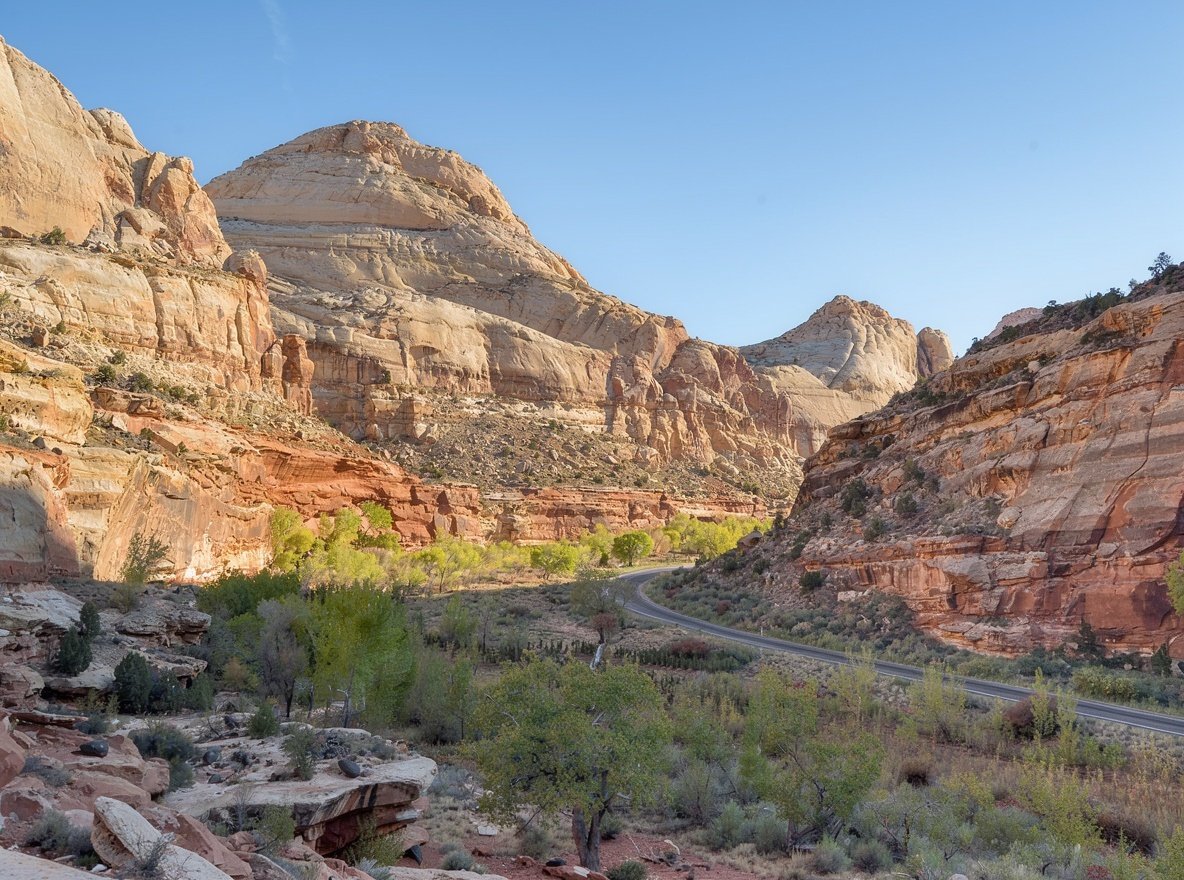
Long tilted sandstone walls in cream, grey and rust with a green valley floor below, seen from a roadside pullout in Capitol Reef
Highway 24 through Capitol Reef is the only place in the park system where a state road runs straight through the feature it was built to show you.

Beyond the big five

What the Mighty 5 leaves out

Five parks is a fraction of what Utah holds. Three state parks are genuinely in the same league: Dead Horse Point outside Moab, Snow Canyon near St. George, and Kodachrome Basin south of Bryce.

Then there is Monument Valley — Navajo Nation land on the Arizona border, and not a US national park at all. It is about three hours from Moab and worth a detour if you have the time; you need a Navajo-guided tour to leave the main road.

The Wave at Coyote Buttes North is technically BLM land, not a park, and requires one of the hardest-to-win permits in the United States. Enter the lottery if you like, but do not build a trip around it.

And Great Salt Lake, west of Salt Lake City, is the largest saltwater lake in the western hemisphere — strange, shallow and oddly beautiful at sunset, especially from Antelope Island.

Hiking, skiing, stargazing and photography
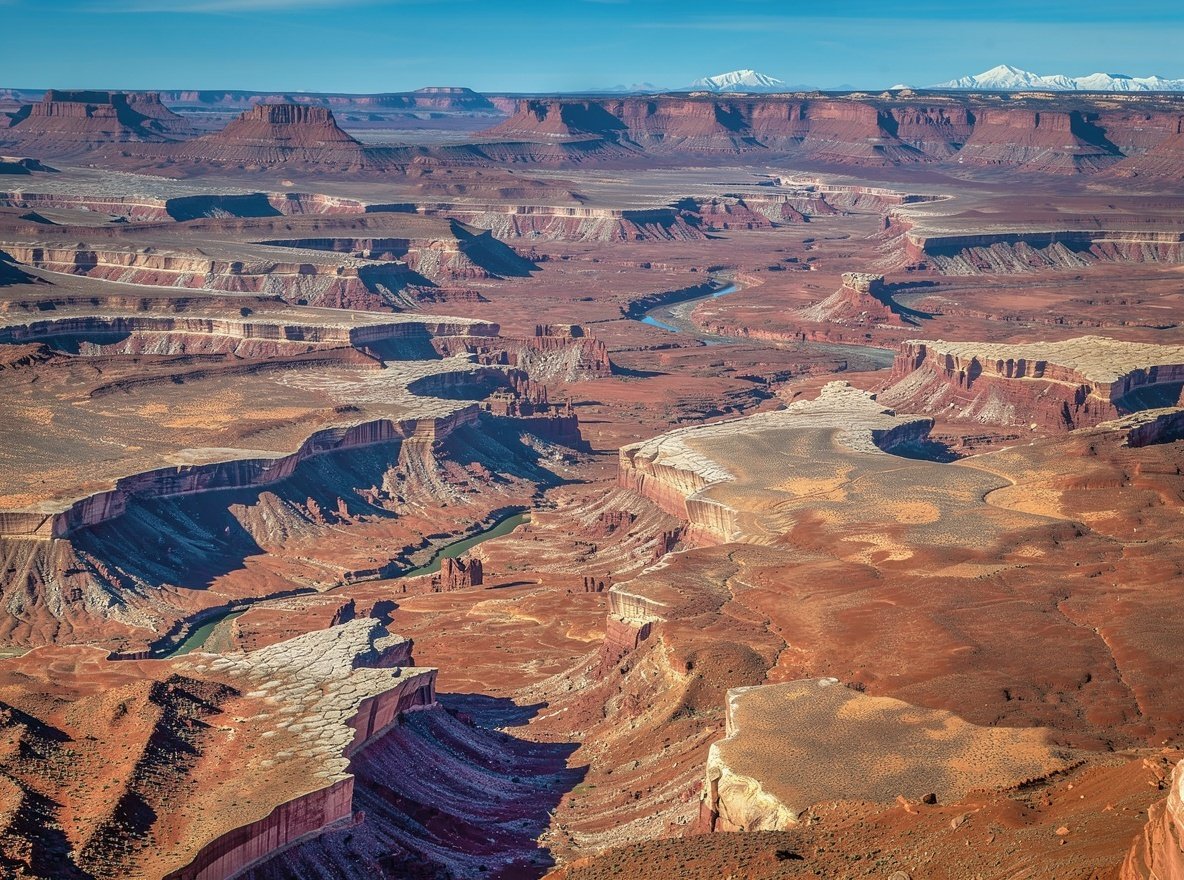
The Green River winding through layered ochre and crimson canyon walls in the Maze district of Canyonlands
The Maze district of Canyonlands is a multi-day expedition — one of the most remote places in the lower 48.

Mighty 5 questions

How many days do you need for all five Utah parks?

Nine days is realistic if you drive yourself and want at least one hike per park. Seven days works for four parks. Five days works for Zion, Bryce and Arches — and it will feel hurried. Remember to budget the driving: the loop from Salt Lake City back to Salt Lake City is roughly 1,500 km.

Which order should you visit the Mighty 5?

From Las Vegas, go Zion → Bryce → Capitol Reef → Canyonlands → Arches, finishing in Moab. From Salt Lake City, reverse it. This keeps the long drives to the start and end of the trip rather than interrupting the middle.

Do you need a permit for Utah national parks?

Not for general entry — you pay an entrance fee and go. Permits apply to specific things: Angels Landing in Zion (lottery), backcountry camping in Canyonlands, river trips, and the Wave outside the park system. Arches has used timed entry reservations in peak season. Check each park's page a few weeks before you travel, because these rules change.

Can you visit Utah parks without a car?

Practically, no. There is no rail or bus network connecting the parks. Zion runs a free shuttle inside the canyon and Springdale runs one to the gate, but you still need to reach Springdale. Renting a car in Las Vegas or Salt Lake City is the standard approach.

What is the cheapest time to visit?

November through February outside the ski towns: lodging in Springdale and Moab drops sharply, and Bryce under snow is extraordinary. December and January bring short days and possible snow closures on the high roads, but the parks are quiet. Summer is peak price and peak heat.