Northern Utah · Wasatch Front
Salt Lake City: the hinge between powder and canyon country
Fifteen minutes from the airport to downtown, forty-five to four ski resorts, and four hours to red rock. Almost every good Utah trip passes through here.
The overview
A small city with unusually large access
Salt Lake City is not a destination people cross an ocean for. It is a city that makes everything else possible — which is a different and arguably more useful thing.
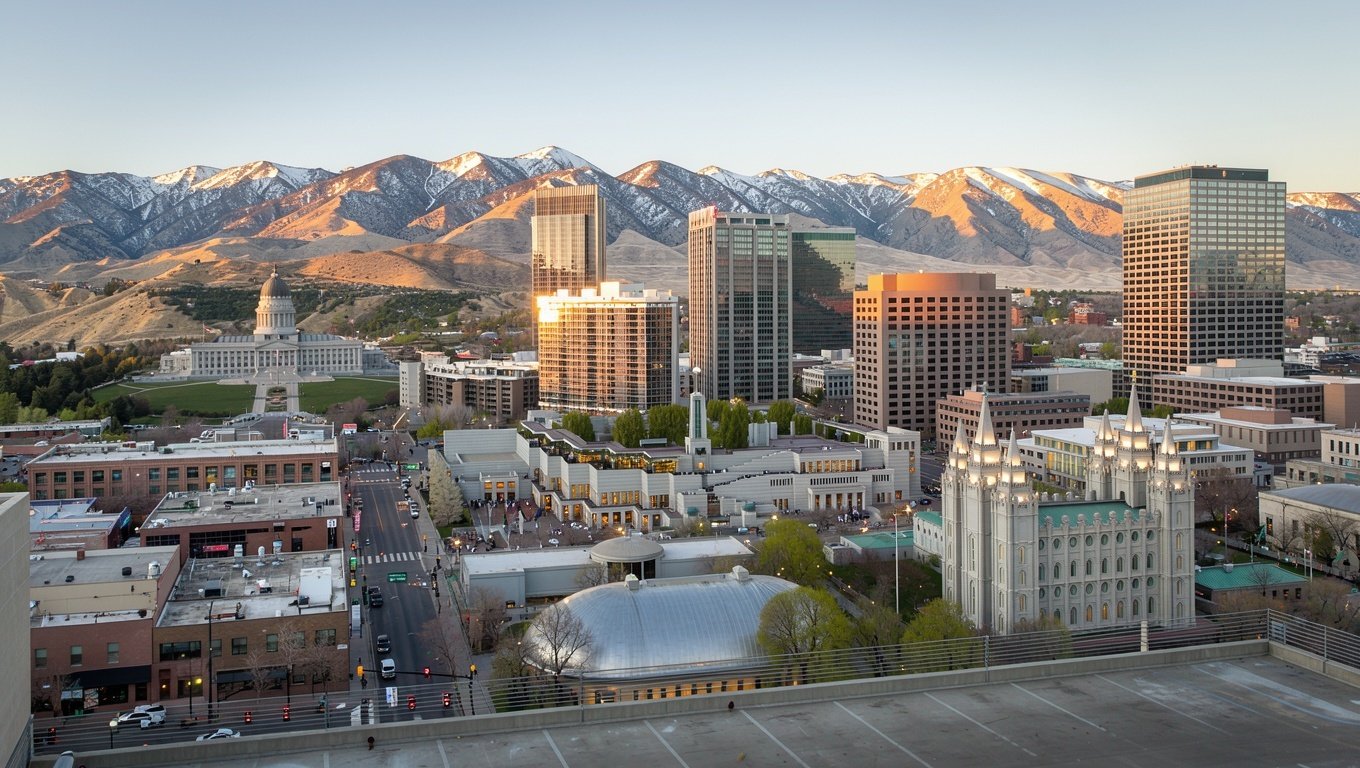
Downtown is compact and walkable, built on a grid so wide that locals joke the blocks were sized to turn a wagon team. Temple Square occupies 10 acres at its centre, and the Wasatch Range rises so abruptly to the east that you can see snow from the middle of the street.
The city's real advantage is logistics. The airport is 11 km from downtown and is a hub for Delta, which means direct flights from most of the US and several international cities. From the terminal you can be on a ski lift in under an hour, or heading south on Interstate 15 toward Moab before lunch.
How long to stay
One full day for downtown if you are passing through, two if you want a ski day or a Great Salt Lake excursion. The city rewards a short stay well and does not really need a long one.
What to actually do
Downtown and beyond
Most of the good things in Salt Lake City sit within a walkable core, plus two excursions that need a car.
Temple Square and the historic core
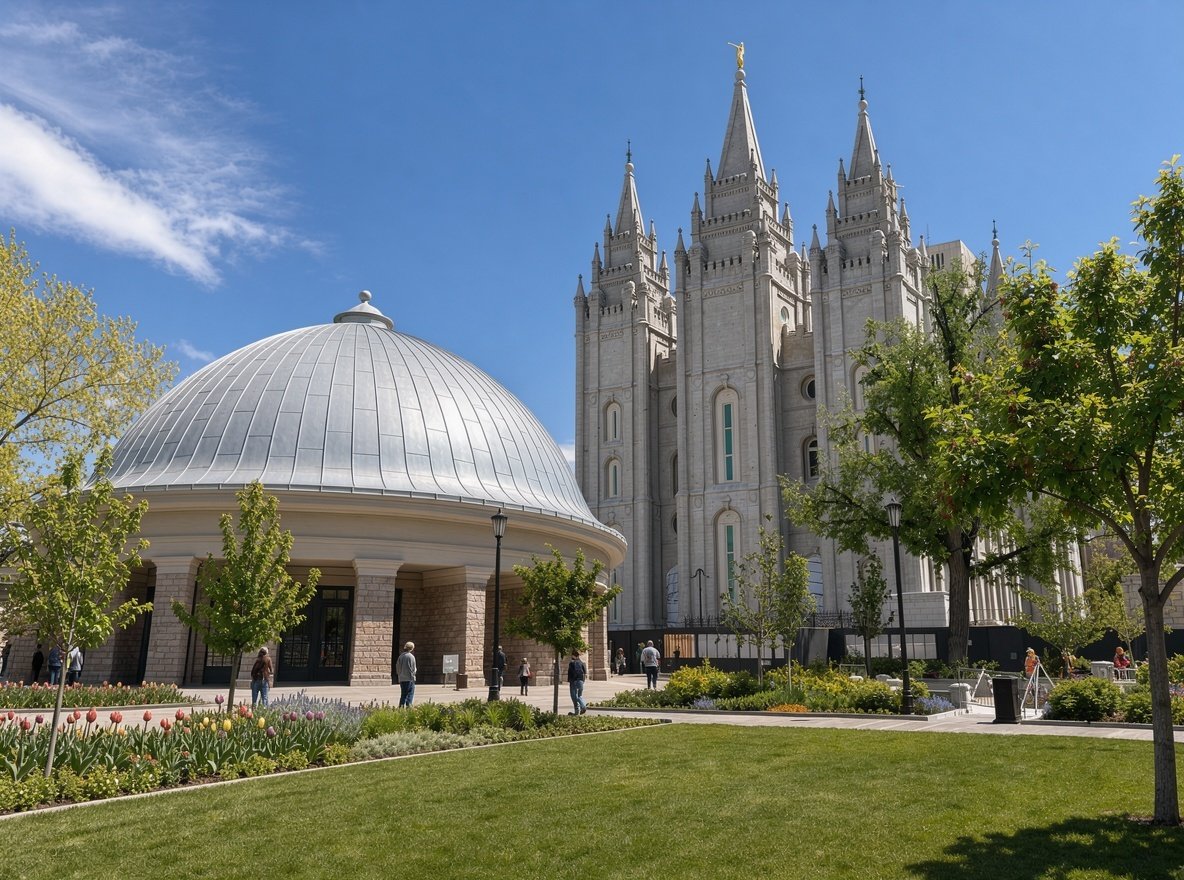
The 35-acre headquarters of the Church of Jesus Christ of Latter-day Saints is the reason most visitors come downtown. The Salt Lake Temple took 40 years to build and is closed for a multi-year seismic renovation; the Tabernacle, Assembly Hall and the two visitor centres remain the main draws.
Nearby, the Utah State Capitol sits on a hill with a clear view down State Street to the mountains — one of the best free views in the city. The Natural History Museum of Utah, up by the University of Utah, is genuinely excellent on dinosaurs and geology.
- Temple Square — free, guided tours available
- Utah State Capitol — free, weekday access
- Natural History Museum of Utah — paid, allow 2–3 hours
- Clark Planetarium and Discovery Gateway — good with children
Great Salt Lake and the salt flats
The lake is the largest saltwater lake in the western hemisphere and it is strange in the best way: shallow, pinkish at the edges, and ringed with salt crust. Antelope Island State Park, reached by a causeway 40 minutes north, is the easiest way to see it — bison roam there, and the sunset from the western shore is remarkable.
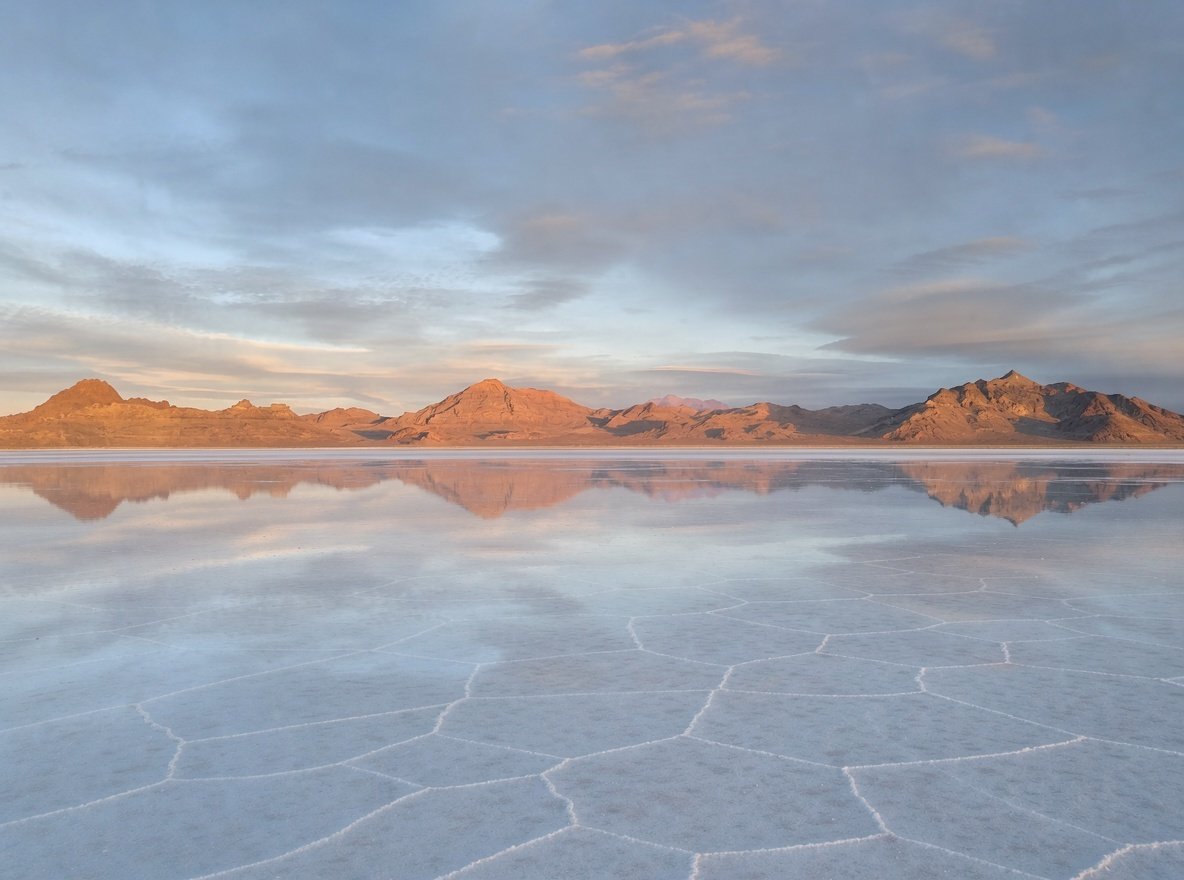
The Bonneville Salt Flats are further out, 90 minutes west on Interstate 80, and otherworldly in the right conditions — a flat white plain where land-speed records are set. Go early or late, and bring water.
Do not swim in it
The lake's salinity makes swimming unpleasant and the shoreline can be muddy and insect-heavy in summer. Look, photograph, walk the causeway — do not plan a beach day.
Where to base yourself
Neighbourhoods and where to sleep
| Area | Character | Price | Best for |
|---|---|---|---|
| Downtown | Walkable, hotels, Temple Square | Mid–high | First visit, no car |
| The Avenues | Historic streets, cafes, hillside views | Mid | Quieter stay, walkable |
| Sugar House | Lively retail, restaurants, park | Mid | Food, local feel |
| 9th & 9th | Boutique, residential, good coffee | Mid–high | Couples, slower pace |
| West Valley / airport | Chain hotels, parking, cheap | Low | Early flights, one-night stops |

Getting around without a car
Salt Lake City has better transit than most American cities of its size. TRAX light rail connects the airport, downtown, the University of Utah and several suburbs. FrontRunner commuter rail runs north to Ogden and south to Provo.
- The Green Line connects the airport directly to downtown in about 20 minutes
- Downtown is a free-fare zone on parts of the network — check current rules
- University of Utah students ride UTA services as part of their fees
- You still need a car for the national parks — hire downtown rather than at the airport
The point of the city
Four resorts within 45 minutes
In the Cottonwood Canyons east of the city, four resorts sit within a short drive of each other: Alta and Snowbird in Little Cottonwood Canyon, Solitude and Brighton in Big Cottonwood. All four are on the same multi-resort pass, and all four get serious snow — the canyons average around 500 inches a season.
Alta is skiers-only and old-school. Snowbird is steeper and more resort-like, with the tram. Brighton and Solitude are smaller, quieter and better value, especially midweek.
The catch is the canyon roads. Little Cottonwood Canyon is the avalanche-prone one, and when it closes, it closes hard — sometimes for hours, occasionally overnight. Chains or four-wheel drive are required during storms, and Utah uses a traction-law system that is enforced.
The local's rule
Go up early and come down early. The 4pm exodus from the Cottonwood Canyons on a powder day is a traffic event in its own right. Alternatively, stay at the base — Snowbird and Alta both have slope-side lodging.
Resort access from SLC
- Alta
- 40 min · skiers only
- Snowbird
- 40 min · steepest terrain
- Solitude
- 45 min · quiet, good value
- Brighton
- 45 min · best for beginners
Getting there and planning
Arriving
- Salt Lake City International (SLC) — 11 km from downtown, a Delta hub with direct routes across the US.
- By rail: Amtrak's California Zephyr stops here, though services are infrequent.
- By road: Interstate 15 north–south, Interstate 80 east–west.
- Car hire: usually cheaper downtown than at the airport; book ahead for winter four-wheel drive.
When to come
- Winter (Dec–Mar) — ski season; cold, snowy, and the canyons busy at weekends.
- Spring (Apr–May) — ideal city weather, snowmelt in the mountains.
- Summer (Jun–Aug) — hot and dry downtown; the mountains are the escape.
- Autumn (Sep–Oct) — the best all-round month; clear light and mild temperatures.
Salt Lake City questions
How far is the airport from downtown and the ski resorts?
About 11 km from downtown — 15 minutes by car or 20 minutes on the TRAX Green Line. Four ski resorts (Solitude, Brighton, Snowbird and Alta) are within 45 minutes of the airport, which is why people fly in and ski the same day.
Is Salt Lake City a good base for the national parks?
It is a start and end point rather than a day-trip base. Moab is 3 h 45 m and Zion is 4 h 30 m. Most travellers spend a day or two here, then drive south and stay in the gateway towns.
Do you need a car in Salt Lake City?
Not for downtown — TRAX and FrontRunner cover the airport, downtown, the university and several suburbs. You do need a car for the national parks, and hiring downtown is usually cheaper than at the airport.
Is Temple Square open to visitors?
The plaza and visitor centres are generally open to the public at no charge, but the Salt Lake Temple itself has been closed for a multi-year renovation. Check current access before you go, because the closure affects parts of the square.
What is there to do in Salt Lake City in one day?
Morning at Temple Square and the State Capitol, lunch downtown, an afternoon at the Natural History Museum of Utah, then sunset at Antelope Island or a drive up one of the Cottonwood Canyons. That is a full and satisfying day.